Part of the Sufi Tour of Iraq series — Sayed Tanveer Hashmi’s group ziyarat across Baghdad, Basra, Samarra and Madayeen.
The Dargah in Baghdad
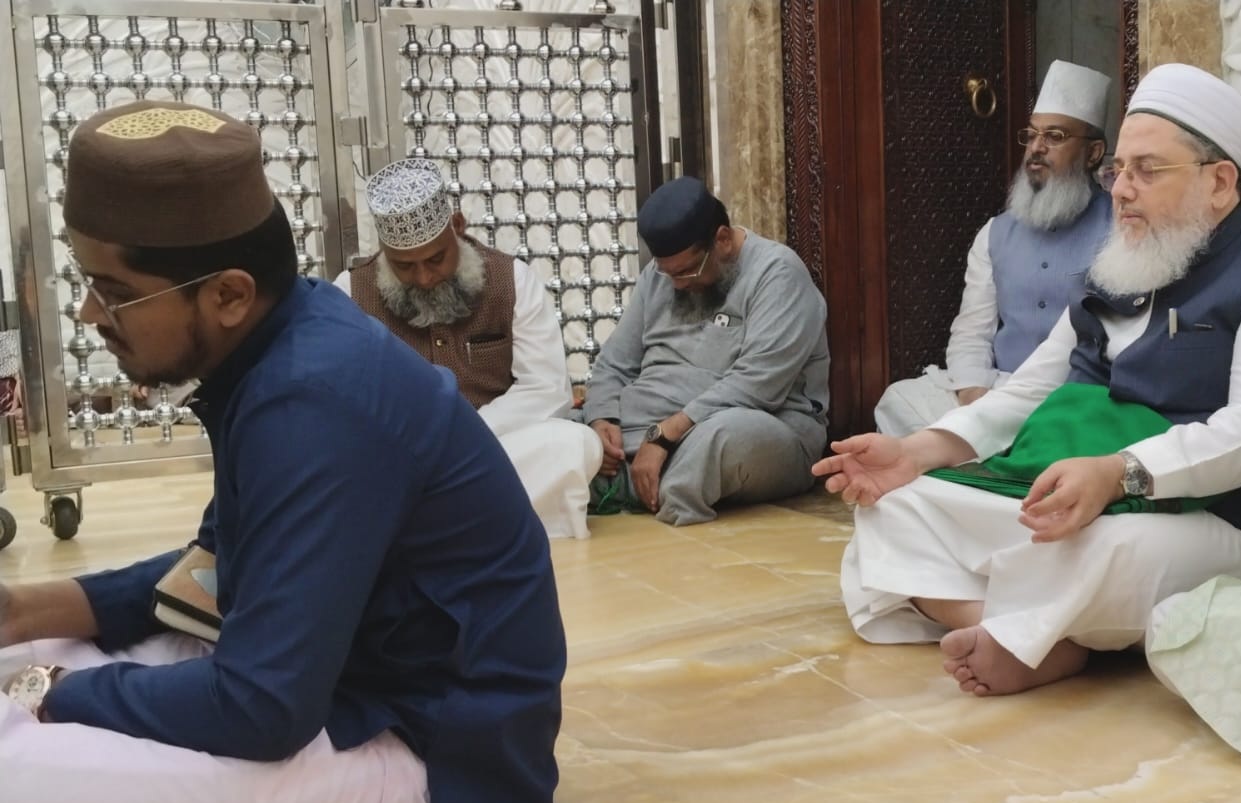
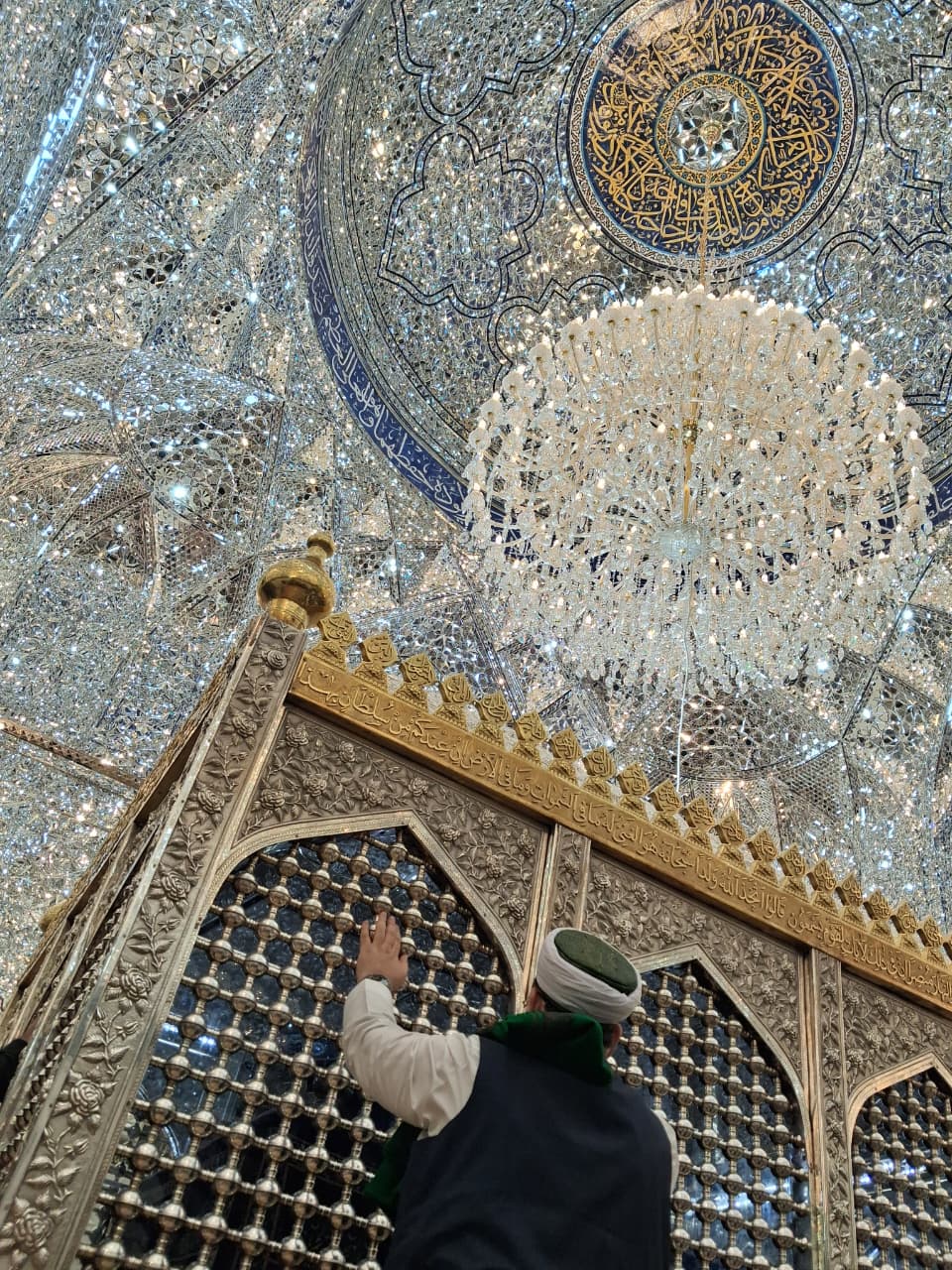
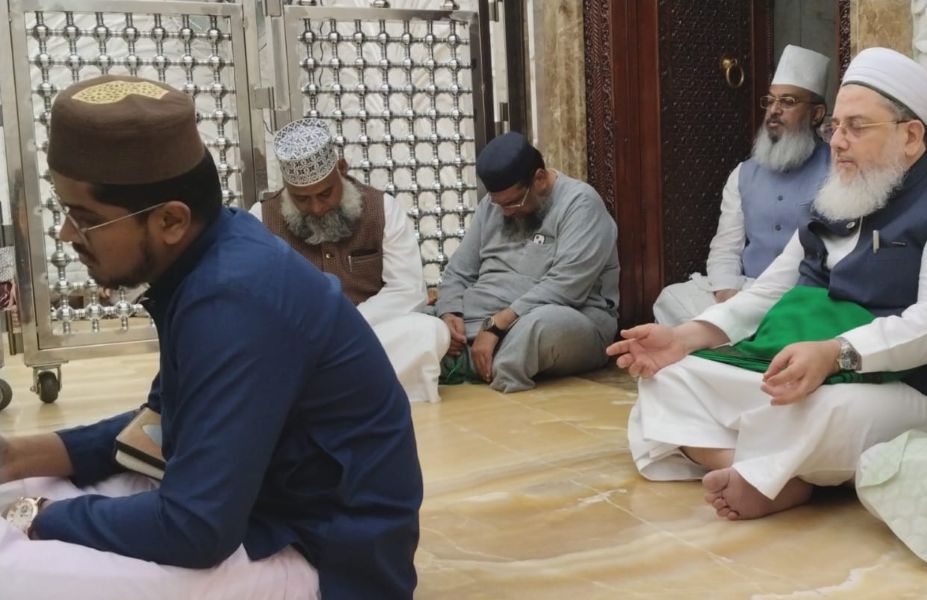
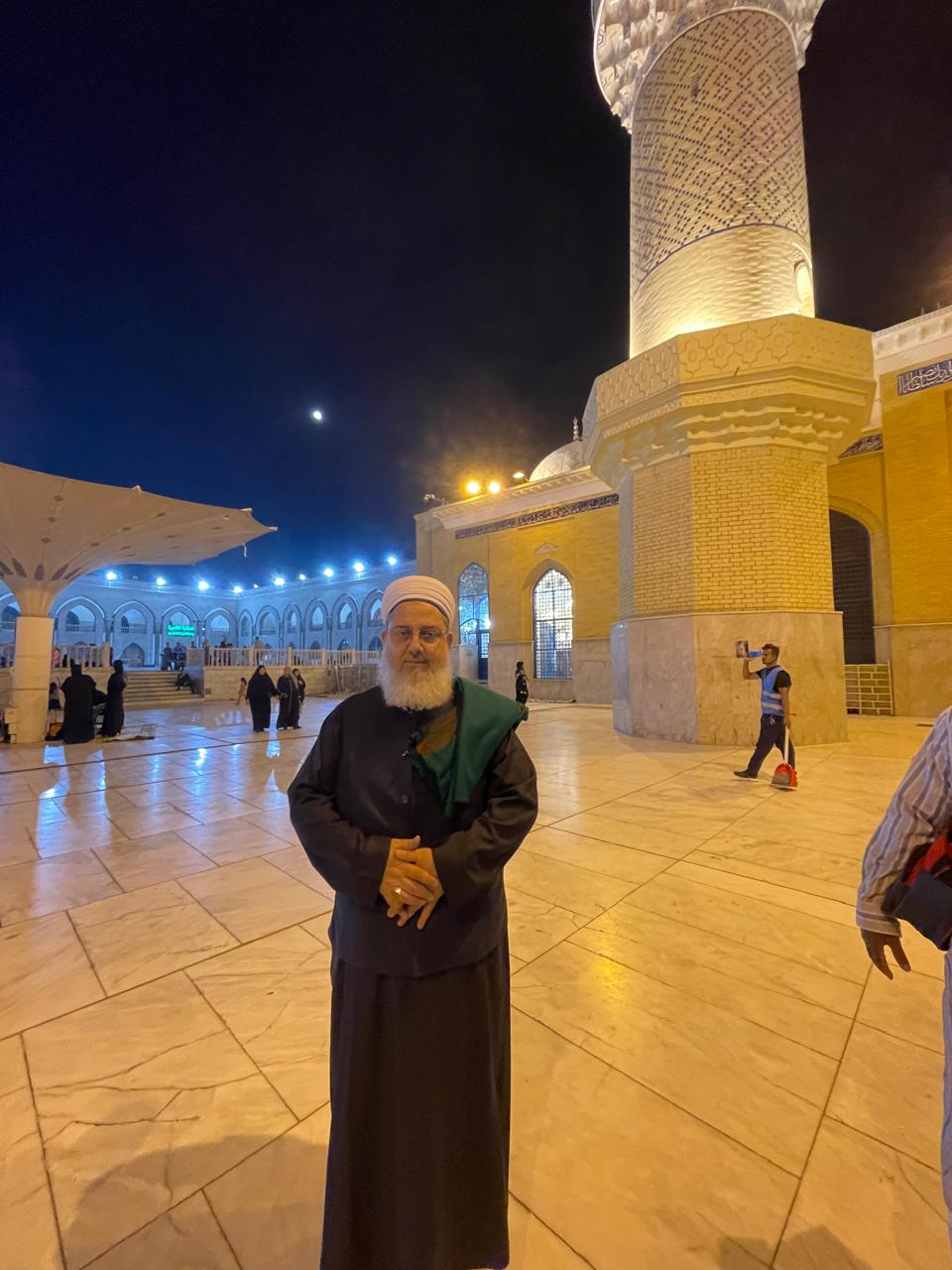
The tour began where every Qadiri pilgrimage begins: the dargah of Sayyid Abdul Qadir Jilani (d. 561 AH / 1166 CE) in Baghdad — Ghous-e-Azam, the master whose order flows through the Academy’s own Qadri-Shuttari chain. Sayed Tanveer Hashmi led the group inside the shrine for recitation and dua beneath its decorated ceilings.
Why He Matters
Author of Al-Ghunya and the Futuh al-Ghayb, Abdul Qadir combined Hanbali scholarship with a spiritual path that drew Baghdad’s scholars and commoners alike. The Qadiri silsila he founded is the senior line of the Academy’s chain — see the Golden Chain.
Key Facts
- Who: Sayyid Abdul Qadir Jilani (d. 561 AH / 1166 CE), Hanbali scholar-preacher of Baghdad
- Known as: Ghous-e-Azam, Bade Peer, Sultan al-Awliya (honorifics of love, not rank over prophets)
- Order: Qadiriyya — the senior line of the Academy’s Qadri-Shuttari chain
- Resting place: Bab al-Shaykh quarter, Baghdad
Teachings
His Futuh al-Ghayb (78 discourses) and Al-Fath al-Rabbani (Friday sermons) teach one doctrine: absolute trust (tawakkul) — want nothing from creation, take means without depending on them, and return every blessing to Allah. He is widely reported to have said, in humility before the saints, that his foot was upon their necks — a statement his disciples understood as responsibility, not pride.
Karamat — What Tradition Holds
Biographers from Ibn Rajab to Al-Sha’rani record numerous karamat: food multiplying for guests, knowledge of hidden states, rescues at sea. The Academy’s position is the classical one — karamat are possible, proven only by continuous transmission, and never a proof of doctrine. What is undisputed is his effect: Baghdad’s scholars sat at his feet, and his school disciplined Sufism with law.
Books
- Al-Ghunya li Talibi Tariq al-Haqq — creed, worship and Sufi conduct
- Futuh al-Ghayb — 78 discourses on trust and sincerity
- Al-Fath al-Rabbani — collected Friday sermons
Sufi Mission & India
The Qadiri order spread from Baghdad to India within two centuries — through saints like Abdul Qadir Sani of Uchh and Miranji Shams al-Ushaq of Bijapur’s Deccan itself. The Academy’s chain carries this line to Bijapur today — see the Golden Chain.
Ziyarat Tips
- Intention (niyyah): come to remember Allah and honour His friends — ask of Allah, not of the saint.
- Purity & dress: wudu, modest dress, low voice; the shrine is a mosque court, not a tourist spot.
- Salutations: salam, then Surah Al-Fatiha and Yasin for the deceased, then personal dua.
- Manners: no pushing at the grille, no loud dhikr that disturbs worshippers, ask before photographing people.
- Charity: give sadaqah to the shrine’s poor fund or local beggars on the way out.
Questions Answered
Where is Abdul Qadir Jilani buried?
In the Bab al-Shaykh quarter of Baghdad, Iraq, where his madrasa and dargah complex stand.
What books did he write?
Chiefly Al-Ghunya, Futuh al-Ghayb and the collected sermons Al-Fath al-Rabbani.
What should I recite at the shrine?
Fatiha and Yasin for the deceased, then personal dua to Allah — the standard Sunni ziyarat etiquette.
Is the Qadiri order active in India?
Yes — Qadiri khanqahs and scholars serve across the Deccan, Punjab and the south, including Bijapur’s own tradition.
Series: Sufi Tour of Iraq: complete guide · Previous: Sufi Tour of Iraq: Samarra, Madayeen & the Sahabi of Basra · Next: Sufi Tour of Iraq: Junayd al-Baghdadi & Sari Saqti