Part of the Sufi Tour of Iraq series — Sayed Tanveer Hashmi’s group ziyarat across Baghdad, Basra, Samarra and Madayeen.
Beyond Baghdad and Basra
The journey extended to Samarra, historic Abbasid capital, where the group visited the haram of Imam Ali al-Jawad; to Madayeen (Ctesiphon), the ancient Sassanid capital turned early Islamic garrison city; and in Basra to the tomb of a Companion of the Prophet.
Why These Places Matter
Iraq layers empire upon empire — Persian capital, Abbasid seat, Ottoman province — and each layer left shrines the group honoured with Fatiha. The tour closed where it began: in gratitude, and in dua for the Academy’s students. To join a future ziyarat, write to info@alhashmi.org.
Key Facts
- Samarra: Abbasid capital (founded 836 CE by Al-Mu’tasim), shrine city on the Tigris
- Madayeen (Ctesiphon): Sassanid imperial capital, early Islamic garrison; traditionally Salman al-Farsi’s resting place
- Basra’s Sahaba: Companions’ tombs including Talha and Zubayr lie in the Basra region
The Three Stops
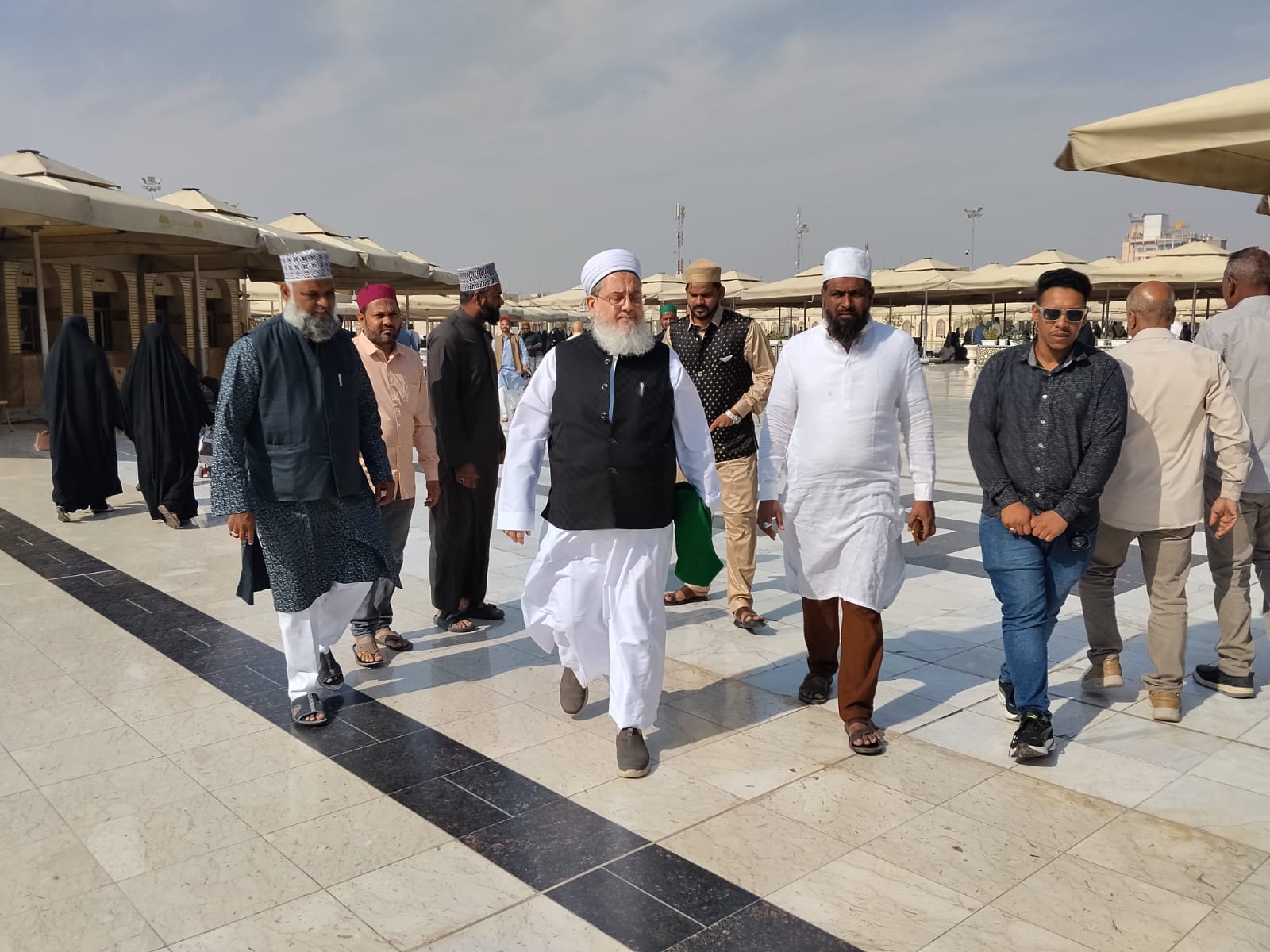
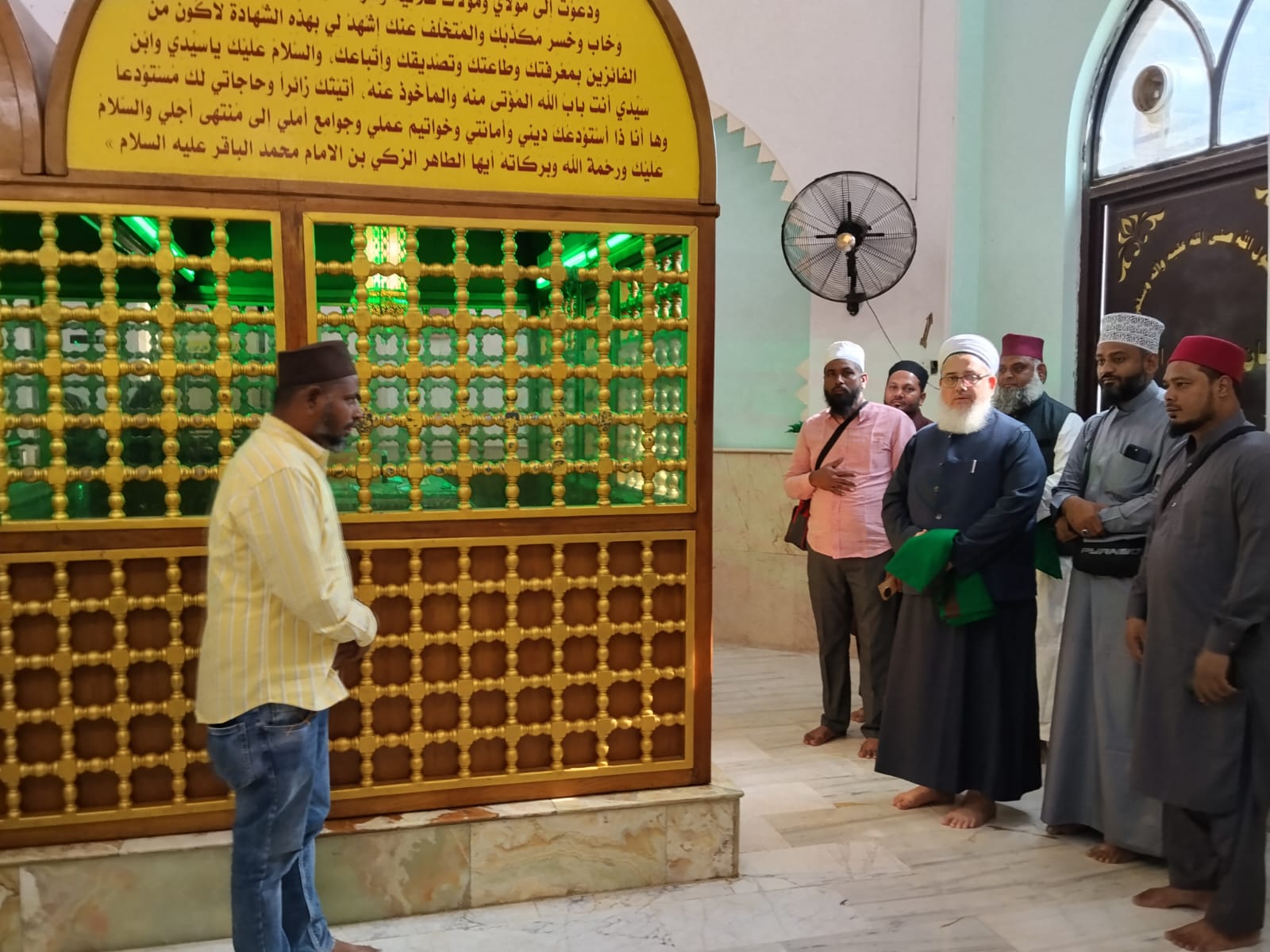
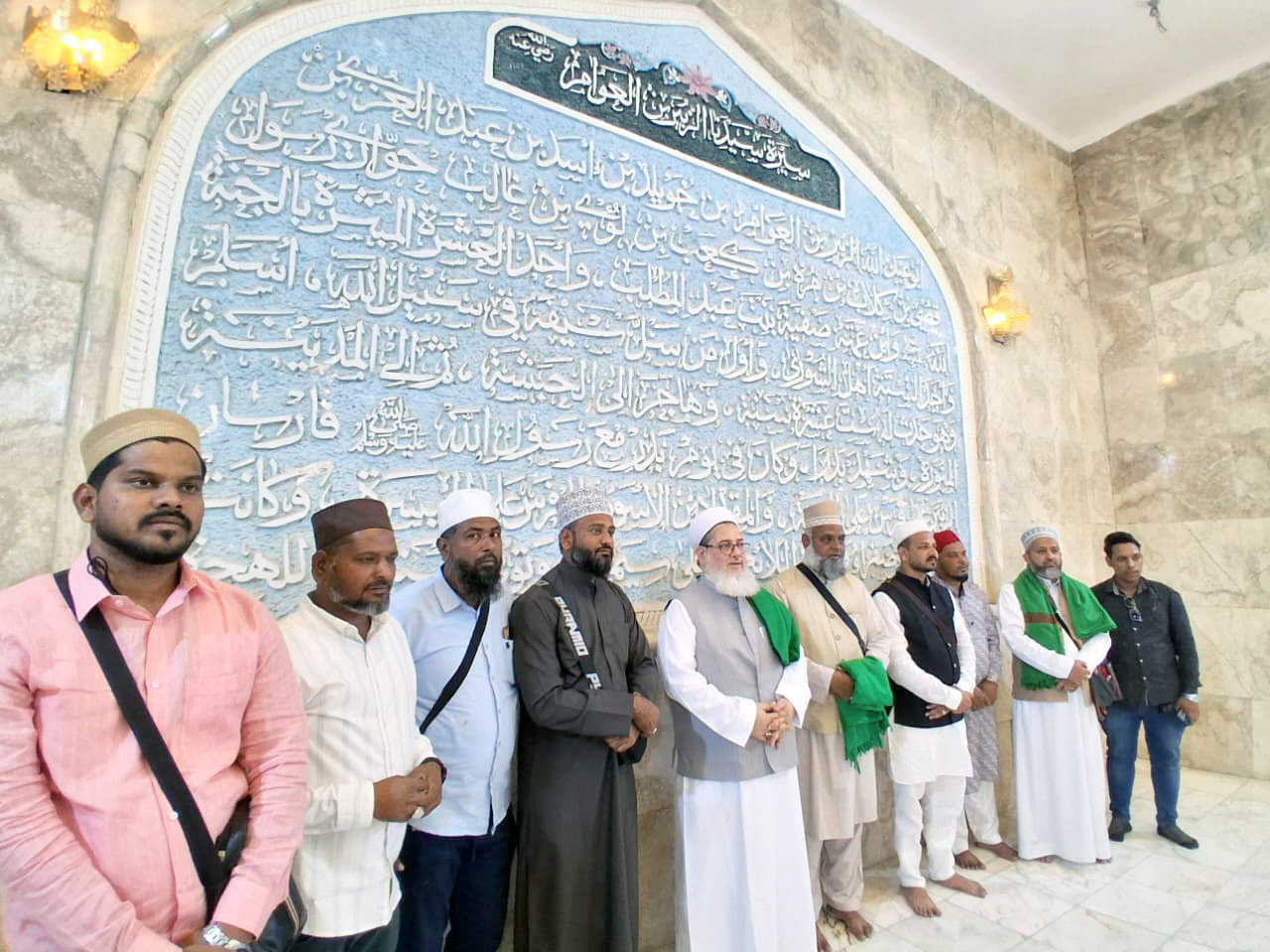
In Samarra the group visited the haram of Imam Ali al-Jawad (d. 220 AH), observing quiet Sunni decorum: Fatiha, dua, no sectarian display. At Madayeen they stood amid the Taq Kasra’s great arch and honoured Salman al-Farsi, the Persian Companion whose grave tradition places there. In Basra they offered Fatiha at a Companion’s tomb — Basra holds Talha ibn Ubaydullah and Zubayr ibn al-Awwam among its Sahabi dead (the photographed tomb is presented without asserting identity).
Ziyarat Tips — With an Extra Note
At contested or shared shrines: keep Sunni decorum, avoid sectarian slogans, follow the local custodian’s guidance. Otherwise the standard rules apply — wudu, Fatiha, dua to Allah, charity on exit.
Sufi Mission
Iraq layers empire upon empire, and each layer left saints. The tour closed where it began: in gratitude, and in dua for the Academy’s students. To join a future ziyarat: info@alhashmi.org — +91 97317 17703.
Questions Answered
What is Samarra known for?
Abbasid capital from 836 CE and a major shrine city on the Tigris.
Who is buried at Madayeen?
Tradition places Salman al-Farsi, the Persian Companion, at Salman Pak near Ctesiphon’s arch.
Which Companions are buried near Basra?
Talha ibn Ubaydullah and Zubayr ibn al-Awwam lie in the Basra region.
How should Sunnis behave at shared shrines?
Fatiha, quiet dua, no slogans — reverence without sectarian display.
Series: Sufi Tour of Iraq: complete guide · Previous: Sufi Tour of Iraq: Suhrawardi & Rifa’i Masters · Next: Sufi Tour of Iraq: Ghous-e-Azam Abdul Qadir Jilani