About Al Jamiatul Hashmia (Jamia Hashimpeer)
Islamic Excellence Rooted in the Blessed Legacy of Qutub-e-Deccan Hazrat Hashimpeer Dastagir (R.A.)
Bijapur (Vijayapur), Karnataka, India – Madinatul Awliya (City of Saints)
Historic Islamic Seminary in the Heart of Madinatul Awliya
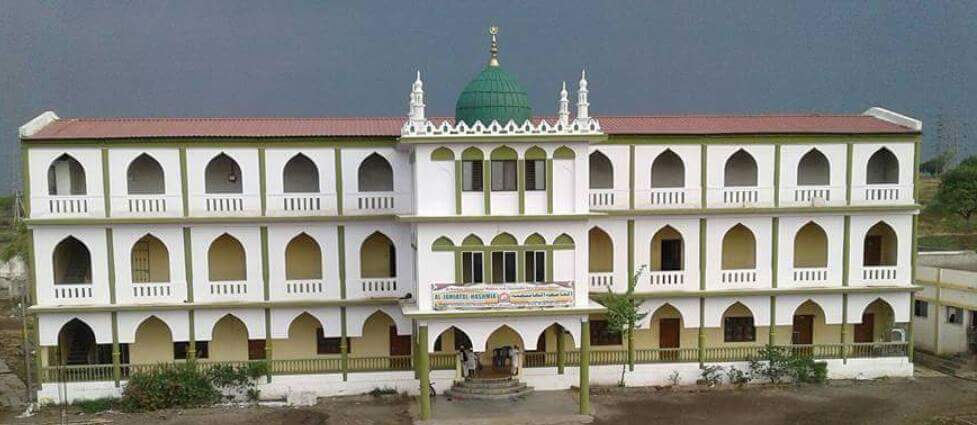
The Al Jamiatul Hashmia, reverently known as Jamia Hashimpeer, stands as a beacon of Islamic learning and Sufi spirituality in Bijapur (Vijayapur), Karnataka—a city historically celebrated as "Madinatul Awliya" (City of Saints). Established in under the visionary leadership of Sayed Muhammad Tanveer Hashmi, this premier residential Islamic seminary in Karnataka carries forward the blessed spiritual legacy of Qutub-e-Deccan Hazrat Hashimpeer Dastagir (Radiyallahu Anhu), one of the most revered Sufi saints of the Qadriya and Shattari Silsila in India.
For over three decades, Al-Hashmi Academy has been nurturing students in both traditional Islamic sciences (Dars-e-Nizami) and modern academic curricula, producing scholars, Imams, educators, and professionals who serve communities across India and the world. The institution embodies the Sufi principle of "Ishq-e-Ilahi" (Divine Love) and "Khidmat-e-Khalq" (Service to Humanity), preparing students to be righteous ambassadors of Islam in contemporary society.
Qutub-e-Deccan Hazrat Hashimpeer Dastagir (R.A.) – Spiritual Luminary of Bijapur
The Blessed Arrival in Madinatul Awliya
Hazrat Hashimpeer Dastagir (Qaddasallahu Sirrahul Aziz), honored with the title "Qutub-e-Deccan" (Spiritual Axis of the Deccan), was a luminous figure in the constellation of Awliya Allah (Friends of Allah) who graced the Deccan plateau. Born in the blessed city of Madinah al-Munawwarah, he arrived in Bijapur during his youth, drawn by divine guidance to spread the message of Allah's love, mercy, and the teachings of Prophet Muhammad (Sallallahu Alayhi Wasallam) in this region.
According to traditional accounts preserved in the oral history of the Hussaini Hashmi family and documented in regional hagiographies, Hazrat Hashimpeer was a direct descendant of the noble Prophetic lineage (Sayyid), tracing his ancestry to Sayyidina Hussain ibn Ali (Radiyallahu Anhuma), the beloved grandson of Prophet Muhammad (ﷺ). His journey from Madinah to Bijapur was marked by spiritual significance—he came not merely as a traveler but as a spiritual guide (Murshid) commissioned to illuminate hearts with the light of Tawhid (Divine Oneness) and Tasawwuf (Sufism).
Spiritual Lineage: Qadriya and Shattari Silsila
Hazrat Hashimpeer belonged to two of the most illustrious Sufi chains (Silsilas) in Islamic history:
- Qadriya Silsila: Founded by the great Sufi master Shaykh Abdul Qadir Jilani (R.A.) of Baghdad (1077-1166 CE), known as "Ghaus-ul-Azam" (The Greatest Helper). This order emphasizes strict adherence to Shariah, spiritual purification (Tazkiyah), and service to humanity. Hazrat Hashimpeer received spiritual authorization (Ijazah and Khilafat) in this noble lineage.
- Shattari Silsila: Established by Shaykh Abdullah Shattar (R.A.), this order gained prominence in India through saints like Shaykh Muhammad Ghaus Gwaliyari (R.A.). The Shattari path is known for its synthesis of spiritual stations (Maqamat) and direct divine love (Ishq-e-Haqiqi). Hazrat Hashimpeer was a distinguished master of this order in the Deccan region.
His dual authorization in both Qadriya and Shattari paths made him a unique spiritual authority, capable of guiding seekers through multiple methodologies of spiritual wayfaring (Sulook). Historical records from the Bijapur Sultanate era (1489-1686 CE) mention Sufi saints who served as spiritual advisors to rulers and commoners alike, and Hazrat Hashimpeer was among these luminaries.
Spiritual Teachings and Practices
The spiritual teachings (Malfuzat) of Hazrat Hashimpeer emphasized:
- Tawhid (Divine Unity): Uncompromising belief in Allah's Oneness and rejection of all forms of polytheism.
- Sunnah Adherence: Strict following of Prophet Muhammad's (ﷺ) teachings in worship, character, and daily conduct.
- Zikr and Muraqabah: Constant remembrance of Allah through prescribed litanies and meditative contemplation.
- Tawakkul (Trust in Allah): Complete reliance on divine providence while taking necessary worldly means.
- Akhlaq (Moral Excellence): Cultivation of humility, patience, gratitude, and compassion toward all creation.
- Khidmat (Service): Selfless service to humanity as manifestation of love for Allah.
- Love for All, Hate None: Universal compassion transcending religious, ethnic, and social boundaries.
The Sacred Dargah and Khanqa-e-Hashmi
The Hazrat Hashimpeer Dargah in Bijapur marks the blessed resting place (Mazar Shareef) of this great saint. Built in traditional Deccan-Sufi architectural style, the Dargah features:
- Main Mausoleum (Gumbad): A beautiful domed structure housing the blessed grave, adorned with Quranic verses in Arabic calligraphy.
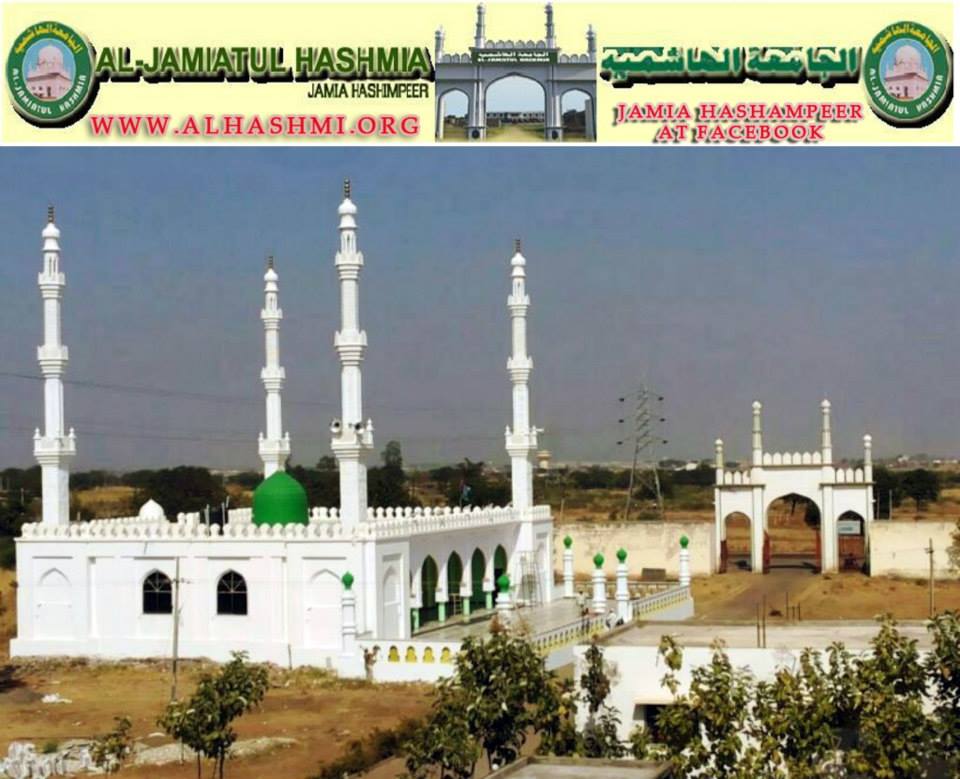
- Masjid Al-Hashmi: The central mosque where five daily prayers and Friday Jumu'ah are conducted.
- Khanqa-e-Hashmi: The traditional Sufi hospice where spiritual seekers (Murids) receive training in Islamic sciences and Sufi practices.
- Langar Khana: Community kitchen serving free meals to visitors, students, and the needy—a centuries-old tradition of hospitality.
- Library (Maktaba): Housing rare manuscripts, classical Islamic texts, and works on Tasawwuf.
The Dargah attracts thousands of devotees annually, particularly during the Urs celebration (annual death anniversary), when the spiritual atmosphere becomes charged with collective remembrance, Qawwali recitations, and charitable distributions. People from all walks of life—Muslims and non-Muslims—visit seeking Baraka (spiritual blessings), prayers for healing, and guidance.
Historical References and Scholarly Works
The life and teachings of Hazrat Hashimpeer have been documented in several traditional sources:
- "Tazkira-e-Awliya-e-Deccan": A biographical compendium of Deccan saints including detailed accounts of Hazrat Hashimpeer's spiritual lineage and miracles.
- "Malfuzat-e-Hashimiya": Collection of spiritual discourses and teachings preserved by his disciples and descendants.
- "Silsila-e-Sufiya-e-Karnataka": Comprehensive work on Sufi chains in Karnataka featuring Qadriya-Shattari saints.
- "Awliya-e-Hind" by Dr. Muhammad Ashraf: Academic study of Indian Sufi saints including Deccan region masters.
These works, written in Arabic, Persian, Urdu, and Kannada, are preserved in the Maktaba of Khanqa-e-Hashmi and consulted by researchers, students, and spiritual seekers.
Spiritual Legacy: The Hussaini Hashmi Family
The spiritual and administrative responsibilities of the Dargah and Khanqa have been carried forward by the Hussaini Hashmi family—direct descendants of Hazrat Hashimpeer—for generations. This blessed lineage has maintained:
- The Sajjadanashin (custodianship) of the Dargah with integrity and devotion.
- Continuous spiritual training (Tarbiyah) programs for seekers of the Qadriya-Shattari path.
- Educational initiatives culminating in the establishment of Al Jamiatul Hashmia in 1995.
- Community welfare through healthcare camps, food distribution, and social harmony initiatives.
- Preservation of classical Islamic manuscripts and Sufi literature.
Today, Sayed Muhammad Tanveer Hashmi, the current Sajjadanashin and Founder President of Al-Hashmi Trust, continues this noble tradition by blending traditional spiritual guidance with modern educational excellence.
Establishment of Al Jamiatul Hashmia – A Vision Realized
The Need for Islamic Education in Modern India
In the post-independence era, Indian Muslims faced significant challenges in accessing quality Islamic education that harmonized religious studies with modern academic requirements. Recognizing this urgent need, Sayed Muhammad Tanveer Hashmi, inspired by the spiritual legacy of his forefathers and guided by divine providence, established Al Jamiatul Hashmia in 1995.
The vision was clear: create an institution where students could master both Dars-e-Nizami (traditional Islamic curriculum) comprising Quran, Hadith, Fiqh, Arabic, Logic, and Theology, while also excelling in CBSE and State Board modern subjects including English, Science, Mathematics, and Computer Studies. This unique integration prepared graduates to serve as Imams, scholars, teachers, and professionals equally competent in religious and worldly domains.
Growth and Expansion (1995-2026)
From humble beginnings with a handful of students studying in the Khanqa's premises, Al Jamiatul Hashmia has grown into a comprehensive educational complex serving over 5,000 students across multiple institutions:
- Foundation: Primary Madrasah classes in Dars-e-Nizami.
- Infrastructure: Dedicated academic building and hostel for 100 students.
- Modernity: Expansion to include modern subjects aligned with state curriculum.
- Inclusion: Establishment of Jamia Fatimatuz Zahra for girls' education.
- Excellence: Launch of Wisdom India School (CBSE English medium).
- Reach: Opening of branch campus (Darul Uloom) in Dharwad, Karnataka.
- Advancement: Introduction of PU College and degree programs.
- Digital: Digital infrastructure and online learning platforms.
Educational Philosophy: Deen and Dunya in Harmony
Integrated Curriculum Design
Al-Hashmi Academy's specially designed syllabus represents a pioneering model in Islamic education:
Religious Studies (Dars-e-Nizami Curriculum)
- Quranic Sciences: Tajweed, Tafsir (Tafsir Ibn Kathir, Tafsir Jalalayn), Hifz-e-Quran program.
- Hadith Studies: Sahih Bukhari, Sahih Muslim, Abu Dawud, Tirmidhi, Mishkat al-Masabih.
- Fiqh (Jurisprudence): Hanafi Fiqh, comparative Fiqh, contemporary issues.
- Arabic Language: Nahw (grammar), Sarf (morphology), Balagha (rhetoric), classical literature.
- Islamic Theology (Aqidah): Based on Ahl-us-Sunnah wal-Jama'ah, refutation of deviant beliefs.
- Sirah (Prophet's Biography): Comprehensive study from authentic sources.
- Tasawwuf: Spiritual purification according to Qadriya-Shattari methodology.
Modern Academic Subjects
- English Language & Literature (CBSE/State Board aligned).
- Mathematics, Science (Physics, Chemistry, Biology).
- Social Studies, History, Geography, Civics.
- Computer Science and Information Technology.
- Kannada and Hindi languages.
- Vocational skills training.
Character Building and Tarbiyah
Beyond academics, moral and spiritual development (Tarbiyah) forms the core of Al-Hashmi's methodology:
- Daily Prayers: Five-time congregational Salah in Masjid Al-Hashmi.
- Quran Memorization: Systematic Hifz program with qualified Qaris.
- Weekly Zikr Sessions: Guided remembrance gatherings in Sufi tradition.
- Akhlaq Training: Practical lessons in humility, honesty, patience, and service.
- Community Service: Student participation in welfare activities and social programs.
Campus and Facilities
The Al Jamiatul Hashmia campus near Hazrat Hashimpeer Dargah features:
- Academic Buildings: Modern classrooms with digital learning aids.
- Residential Hostels: Separate accommodations for 200+ boys and 300+ girls with 24/7 supervision.
- Masjid Al-Hashmi: Central prayer facility with capacity for 1,000 worshippers.
- Library (Maktaba): 10,000+ volumes in Arabic, Urdu, English, and Kannada.
- Computer Labs: Digital literacy and IT training centers.
- Sports Facilities: Playgrounds and indoor games for physical development.
- Dining Halls: Nutritious halal meals three times daily.
- Medical Room: First-aid and health monitoring.
Impact and Alumni Success
Over 30 years, Al-Hashmi Academy has produced thousands of graduates serving globally as:
- Imams and Khatibs: Leading mosques across India, Middle East, Europe, and North America.
- Islamic Scholars (Ulema): Teaching in madrasas and universities worldwide.
- Professionals: Doctors, engineers, and entrepreneurs maintaining Islamic identity.
- Community Leaders: Social workers and interfaith dialogue facilitators.
Vision for the Future
As Al-Hashmi Academy enters its fourth decade, the institution continues expanding:
- New campuses in Bangalore, Hubli, and Mangalore.
- Online Islamic education portal reaching a global audience.
- Research center for Islamic jurisprudence and contemporary issues.
- Enhanced vocational training for employability.
- Strengthened partnerships with universities for higher education pathways.
علم اور عمل، دین اور دنیا — الحمد للہ جامعہ ہاشم پیر، بیجاپور
"Knowledge and Action, Faith and World — Al Jamiatul Hashmia, Bijapur"
Join the Al-Hashmi Family
Be part of the blessed legacy of Hazrat Hashimpeer (R.A.) and Madinatul Awliya. Enroll your children in an institution where Islamic spirituality meets academic excellence.