Part of the Sufi Tour of Iraq series — Sayed Tanveer Hashmi’s group ziyarat across Baghdad, Basra, Samarra and Madayeen.
Bibi Kalandar
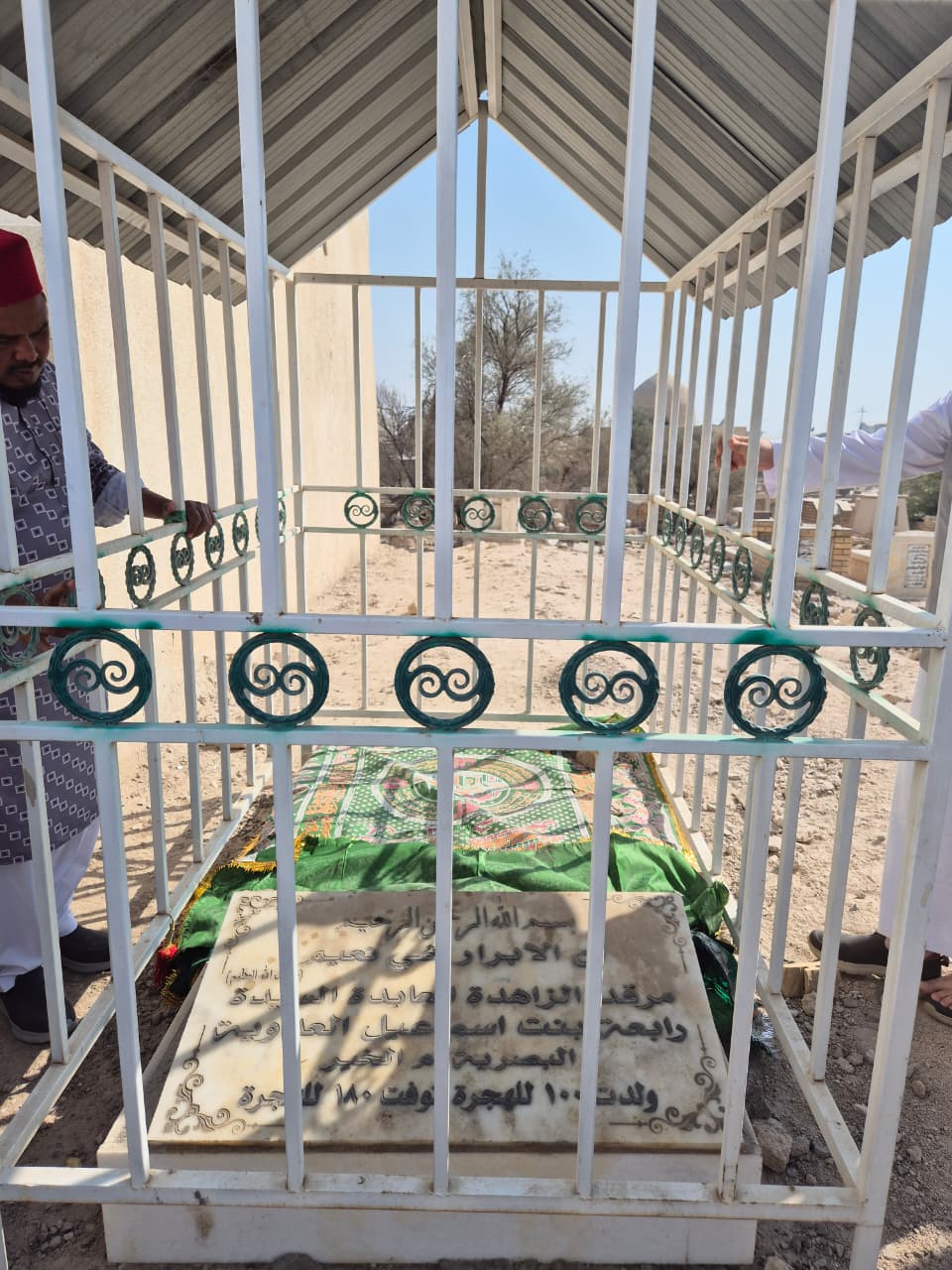
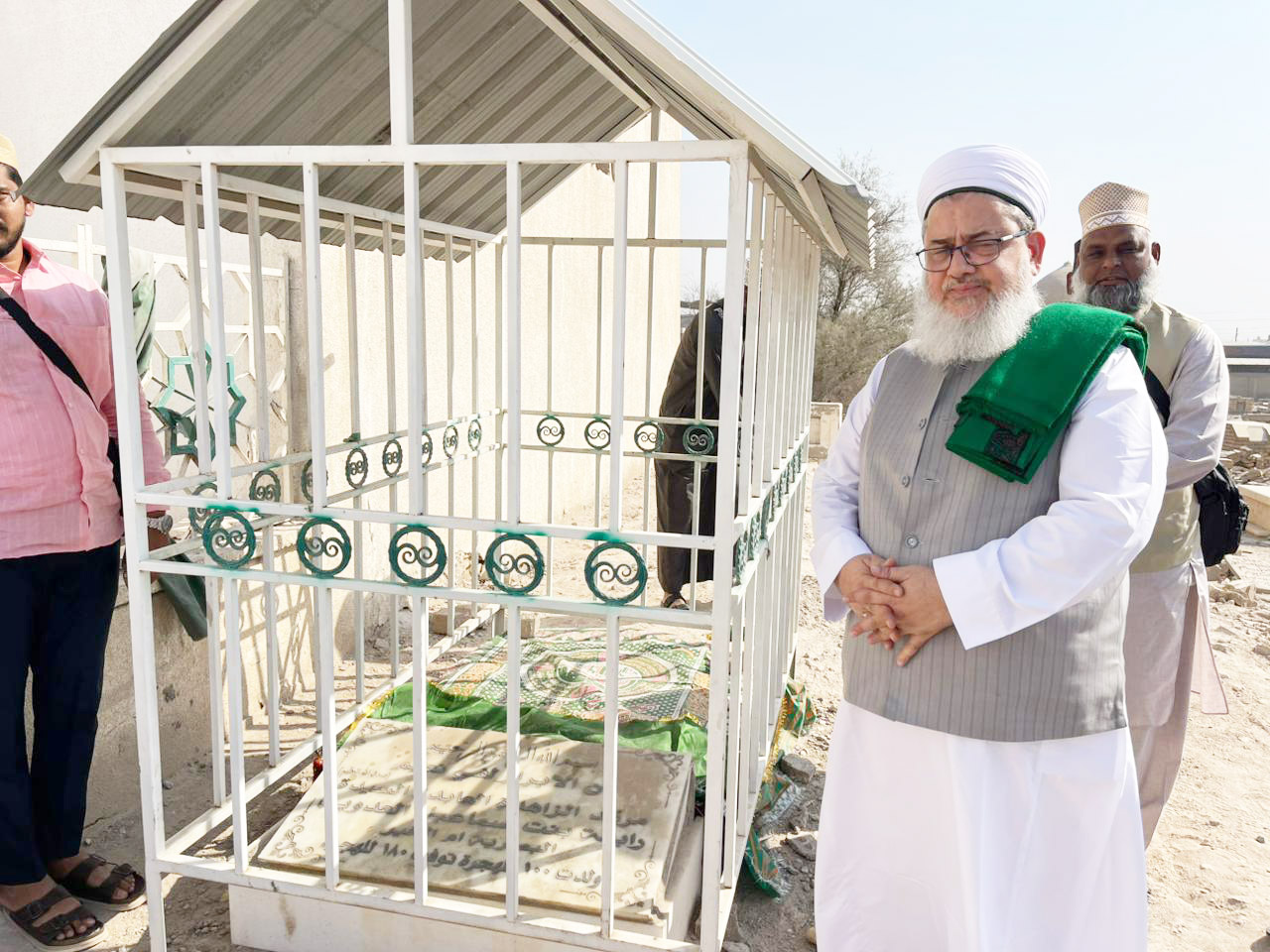
South to Basra, city of the first ascetics, to Rabia al-Adawiyya (d. 185 AH / 801 CE) — Bibi Kalandar — the saint of selfless divine love, who said she worshipped neither from fear of Hell nor hope of Paradise. Sayed Tanveer Hashmi is photographed at her shrine.
Why She Matters
Rabia’s love-mysticism runs through every order, including the Shuttari path honoured at Al Hashmi Academy — love before fear, presence before ritual.
Key Facts
- Who: Rabia al-Adawiyya (d. 185 AH / 801 CE), Basra
- Known as: Bibi Kalandar — saint of selfless divine love
- Resting place: Basra (traditional site), also honoured at a Jerusalem site
Teachings
Her verses, transmitted across centuries, state the doctrine of love: I love Thee with two loves — one for me, one for Thee. She refused marriage to devote herself wholly, freed herself from slavery through piety, and taught that worship for Paradise or from fear of Hell is merchants’ worship.
Karamat — What Tradition Holds
Hagiography gives her a lamp lit without oil, food arriving unasked, the Hajj performed and the Kaaba coming to meet her. The Academy retells these as love’s poetry in story form — the theology (worship for Allah alone) stands on its own texts.
Sufi Mission
Every order’s chapter on love (mahabba) opens with Rabia — including the Shuttari manuals studied at Al Hashmi Academy. Her Basra is our Tasawwuf’s birthplace.
Ziyarat Tips
- Intention (niyyah): come to remember Allah and honour His friends — ask of Allah, not of the saint.
- Purity & dress: wudu, modest dress, low voice; the shrine is a mosque court, not a tourist spot.
- Salutations: salam, then Surah Al-Fatiha and Yasin for the deceased, then personal dua.
- Manners: no pushing at the grille, no loud dhikr that disturbs worshippers, ask before photographing people.
- Charity: give sadaqah to the shrine’s poor fund or local beggars on the way out.
Questions Answered
Where is Rabia Basri buried?
Traditionally in Basra, Iraq (Bibi Kalandar); a site in Jerusalem is also honoured.
What is she famous for?
Selfless divine love — worshipping Allah for Himself, not for Paradise or from fear.
Did she marry?
Tradition holds she refused marriage to devote herself entirely to devotion.
Can women visit shrines?
Yes — with hijab, wudu and quiet manners; the group included family arrangements.
Series: Sufi Tour of Iraq: complete guide · Previous: Sufi Tour of Iraq: Imam Ahmad ibn Hanbal · Next: Sufi Tour of Iraq: Hasan Basri & Habib Ajmi