Part of the Sufi Tour of Iraq series — Sayed Tanveer Hashmi’s group ziyarat across Baghdad, Basra, Samarra and Madayeen.
Two Adjoining Shrines
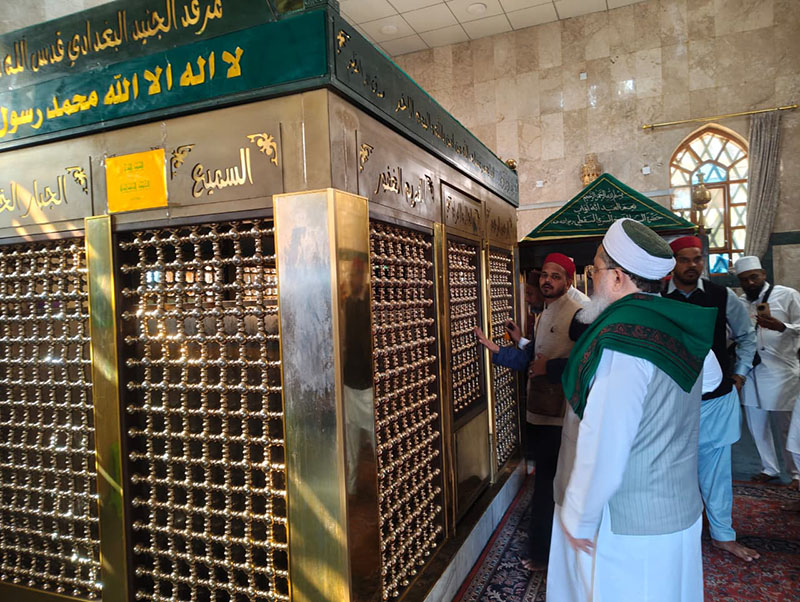
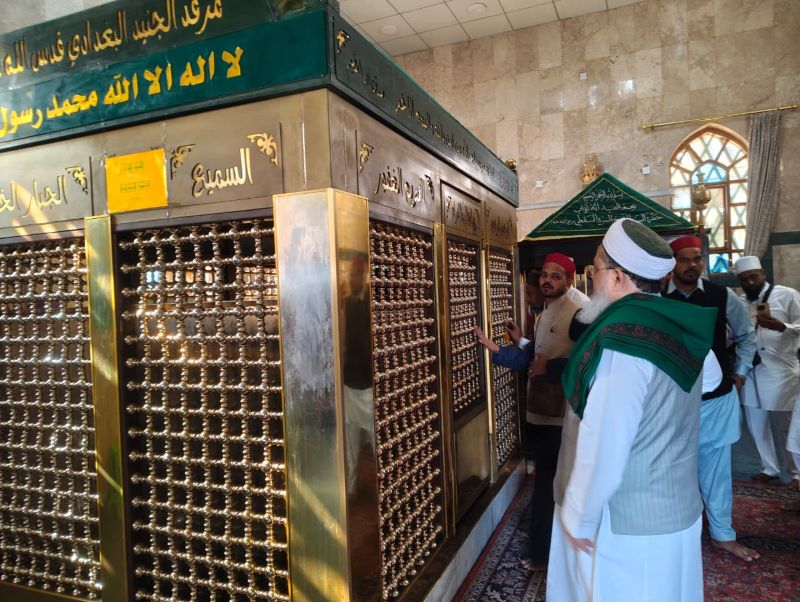
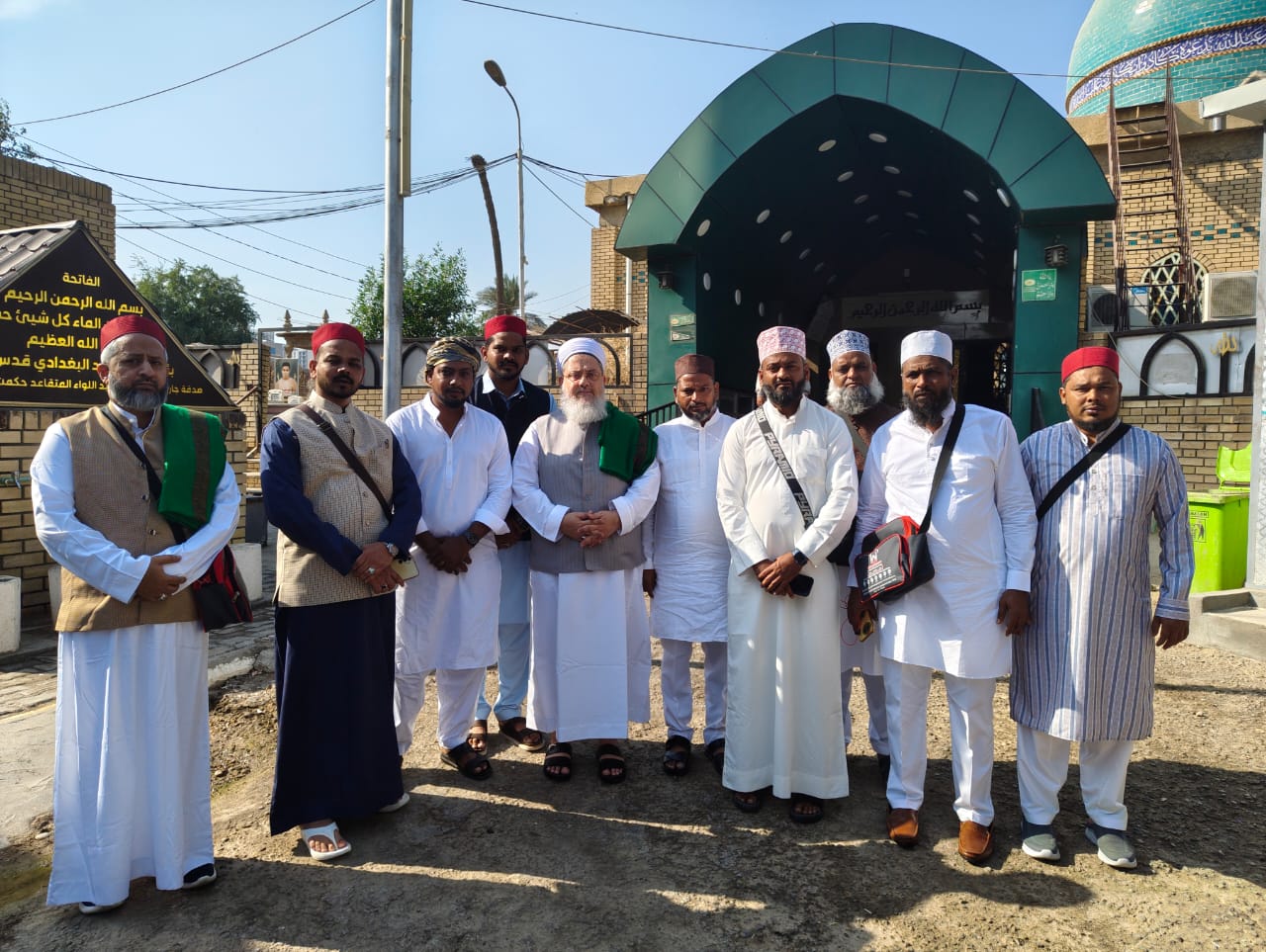
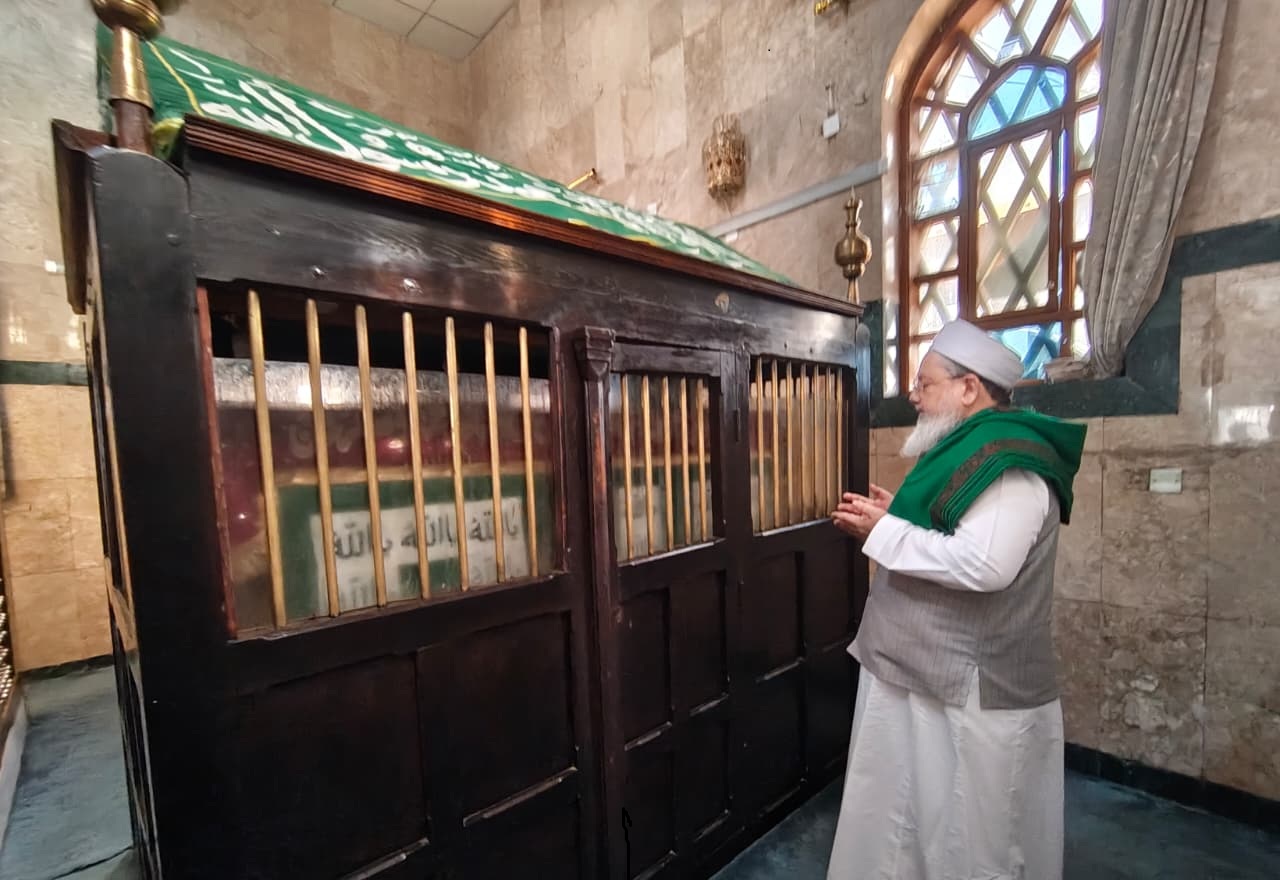
In Baghdad the group visited Imam Junayd al-Baghdadi (d. 298 AH / 910 CE) — Sayyid al-Taifa, whose sober, Sharia-bound Tasawwuf became the Sunni standard — and beside him his maternal uncle and master Sari al-Saqti (d. 257 AH). The group photographed together outside the two shrines.
Why They Matter
Junayd’s school — fana with sobriety, ecstasy disciplined by law — is the doctrinal backbone of the orders the Academy teaches, including through Sheikh Wajihuddin’s works studied at the Research Centre.
Key Facts
- Junayd al-Baghdadi (d. 298 AH / 910 CE) — Sayyid al-Taifa, master of sober Tasawwuf
- Sari al-Saqti (d. 257 AH / 867 CE) — his maternal uncle and first master
- Resting places: adjoining shrines in Baghdad, visited together
Teachings
Junayd defined Tasawwuf as conduct: hunger, sleeplessness, silence, solitude — and above all, sobriety (sahw) over intoxication (sukr). His famous counsels — that the disciple needs eight qualities, from the generosity of prophets to the humility of dust — are memorised in khanqahs to this day. Sari taught him the root: know Allah before you claim to love Him.
Karamat — What Tradition Holds
Hagiographies attribute to Junayd insight into disciples’ hidden states and foretellings later confirmed. The Academy repeats the classical caution: such reports inspire but do not legislate; Junayd’s own rule stands — any ecstasy contradicting the Quran and Sunnah is rejected.
Works
Junayd wrote little — letters (Rasa’il) and sayings preserved by Al-Qushayri, Al-Sulami and Al-Hujwiri. His school survives as method, not library: the Junaydi discipline underlies the orders the Research Centre studies.
Sufi Mission & India
Every Sunni order — including the Shuttari path of Sheikh Wajihuddin — claims Junayd’s sobriety as its charter. His chain runs Baghdad–Gwalior–Gujarat–Bijapur in our Golden Chain.
Ziyarat Tips
- Intention (niyyah): come to remember Allah and honour His friends — ask of Allah, not of the saint.
- Purity & dress: wudu, modest dress, low voice; the shrine is a mosque court, not a tourist spot.
- Salutations: salam, then Surah Al-Fatiha and Yasin for the deceased, then personal dua.
- Manners: no pushing at the grille, no loud dhikr that disturbs worshippers, ask before photographing people.
- Charity: give sadaqah to the shrine’s poor fund or local beggars on the way out.
Questions Answered
Who was Junayd al-Baghdadi?
A 3rd-century-Hijri Baghdadi master called Sayyid al-Taifa (chief of the group) for codifying sober, law-bound Tasawwuf.
Who was Sari al-Saqti?
Junayd’s uncle and first teacher, himself a disciple of Maroof Karkhi — linking this shrine to the next post in our series.
Where are they buried?
In adjoining shrines in Baghdad, traditionally visited in one circuit.
What is sober Sufism?
Ecstasy disciplined by Sharia: fana without violating law — Junayd’s enduring rule.
Series: Sufi Tour of Iraq: complete guide · Previous: Sufi Tour of Iraq: Ghous-e-Azam Abdul Qadir Jilani · Next: Sufi Tour of Iraq: Bishr al-Hafi, Maroof Karkhi & Bahlol Dana